Central Florida Hospitals Unite to Train 25 Healthcare Professionals for Hazmat and Chemical Emergencies
- Category: Community
- Posted On:
.jpg)
TITUSVILLE, FLA. (November 6, 2026)—When a hazardous materials incident sends contaminated patients to the emergency department, hospitals must be ready to act immediately. Last week, 25 healthcare professionals from healthcare organizations across Central Florida took a major step toward that readiness, completing a three-day Hospital Emergency Response Team (HERT) train-the-trainer program hosted by Parrish Healthcare at Parrish Medical Center, October 27–29, 2026.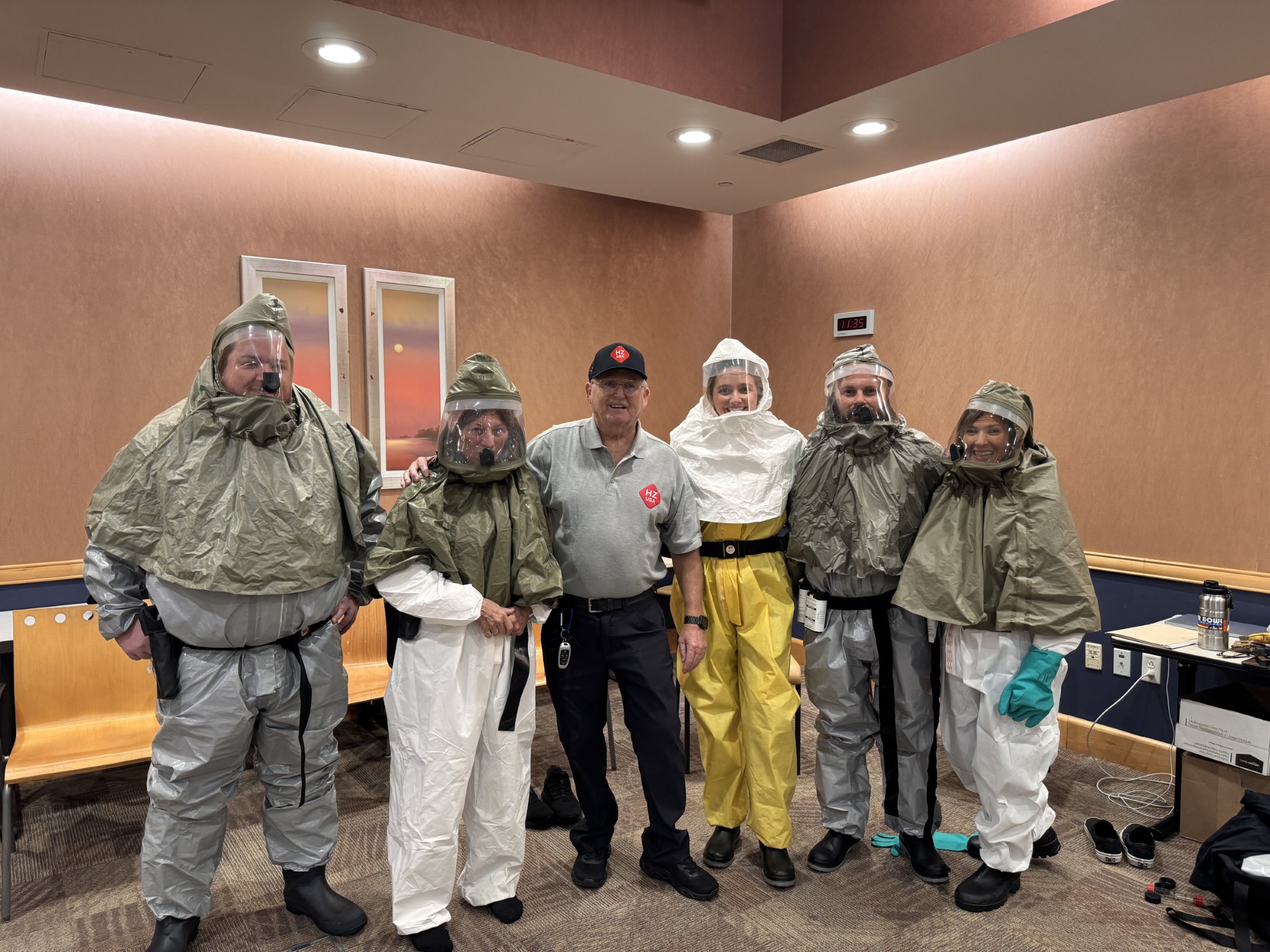

The regional training brought together participants from Parrish Medical Center, HCA Healthcare, AdventHealth, Health First, Nemours Children's Health and Halifax Health to strengthen hospital readiness and response capabilities during hazardous materials incidents, chemical exposures, patient decontamination events and other emergencies. Among the 25 graduates was one four-legged standout: Colby, a service dog who joined the training and earned recognition as an honorary graduate.
The program concluded with a realistic emergency response simulation, giving participants the opportunity to demonstrate their newly acquired skills, apply personal protective equipment (PPE) protocols, practice patient decontamination procedures and coordinate emergency response efforts in a simulated hazardous materials incident.
Representatives from Brevard County Emergency Management, the Florida Department of Health, Titusville Police Department and Titusville Fire Department attended the final simulation to observe the exercise and support the collaborative training effort. Their participation reinforced the importance of coordination among hospitals, public safety agencies and emergency management partners when responding to community-wide emergencies.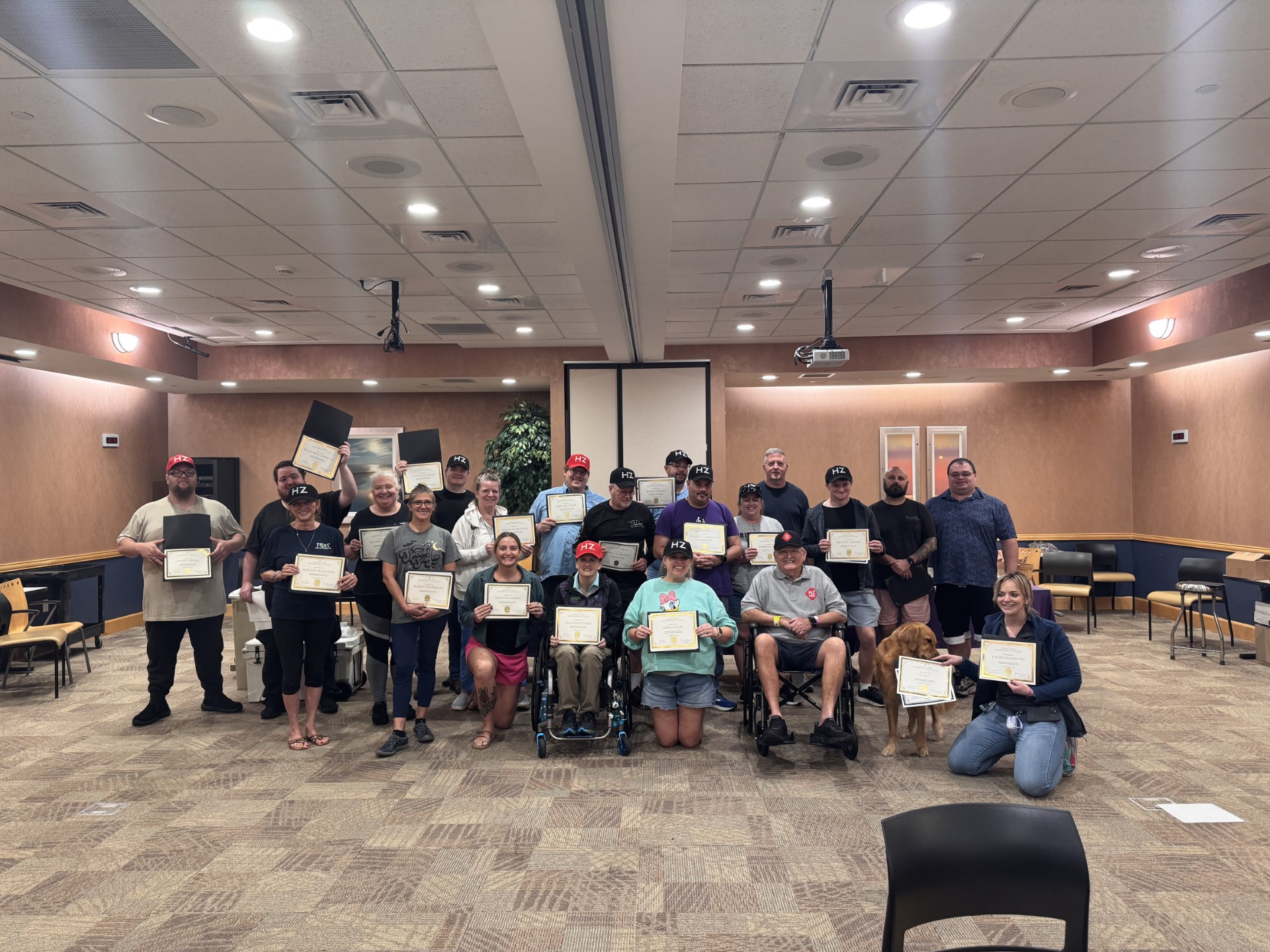
“Our Board of Directors has long expected us to be at our highest level of readiness in cooperation with Titusville Fire and Police to protect our North Brevard community,” said George Mikitarian, President and CEO of Parrish Healthcare. “Bringing healthcare professionals together from across the region strengthens our collective ability to respond to emergencies. This training represents an investment not only in our healthcare teams, but in the safety and well-being of the communities we have the privilege to serve.”
The three-day train-the-trainer program was funded by the Central Florida Disaster Medical Coalition (CFDMC) and facilitated by Hot Zone USA, an emergency response, safety training and hazardous materials equipment provider.
The training responds to a gap regional hospitals have worked to close for years: a shortage of trained hospital decontamination personnel. Findings from the annual Central Florida medical surge exercise identified decontamination readiness as an opportunity for improvement, prompting regional hospitals to prioritize comprehensive training that would allow them to establish, train and maintain their own emergency decontamination teams.
“For the past decade, the annual medical surge exercise in Central Florida has highlighted the need for trained decontamination personnel at all hospitals,” said Lynne Drawdy, Executive Director of the Central Florida Disaster Medical Coalition. “This program provides hospitals with the knowledge and practical experience needed to establish and sustain effective decontamination teams, strengthening preparedness throughout our region.”
“Seeing 25 healthcare professionals complete this training and demonstrate their skills during the final simulation is a tremendous accomplishment,” said Leigh Spradling, Senior Safety and Emergency Preparedness Specialist at Parrish Healthcare. “Just as important is the collaboration we witnessed among our healthcare organizations and community response partners. Together, we are better prepared to protect our patients, team members and communities when it matters most.”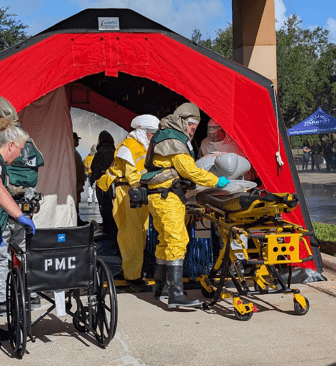
Through hands-on instruction, realistic scenarios and collaborative exercises, graduates are now equipped to help strengthen emergency decontamination capabilities within their respective healthcare organizations and share their knowledge with fellow team members. The successful completion of the program marks another important step toward building a more prepared, coordinated and resilient regional healthcare response network.